Showing posts with label grand guignol. Show all posts
Showing posts with label grand guignol. Show all posts
Wednesday, June 15, 2011
Coming Soon: THE ROCK OPERA SHOW
What's THE ROCK OPERA SHOW, you ask? As well you might. I'll explain later...

Thursday, August 27, 2009
Addams with a Twist
Avant-garde puppeteer Basil Twist has joined the creative team of the new Addams Family musical, set to open at the Lunt-Fontaine in April 2010.
Basil Twist is a true genius of puppetry, whose water-tank abstractions set to Berlioz's Symphonie Fantastique was an unexpected smash, and whose collaboration with drag chanteuse Joey Arias was renowned for its trippy inventiveness. Twist will no doubt be bringing life to Thing, Cousin It and who knows what other grotesques in the show.
Though I was originally trepidatious, with Twist on board, plus Nathan Lane, Bebe Neuwirth and Terrance Mann in the cast and music by The Wild Party's Andrew Lippa, I have to say it's shaping up quite well.
Here's a great feature on Twist's work.
Basil Twist is a true genius of puppetry, whose water-tank abstractions set to Berlioz's Symphonie Fantastique was an unexpected smash, and whose collaboration with drag chanteuse Joey Arias was renowned for its trippy inventiveness. Twist will no doubt be bringing life to Thing, Cousin It and who knows what other grotesques in the show.
Though I was originally trepidatious, with Twist on board, plus Nathan Lane, Bebe Neuwirth and Terrance Mann in the cast and music by The Wild Party's Andrew Lippa, I have to say it's shaping up quite well.
Here's a great feature on Twist's work.
Thursday, April 23, 2009
SILENCE!
Music and lyrics Jon and Al Kaplan. SILENCE! Silence of the Lambs: The Musical won the Overall Excellence Award for Outstanding Musical at the 2005 NYC Fringe festival. Their next project is a musical film of the 60s cheesefest They Saved Hitler's Brain.
-
Thursday, April 16, 2009
LITTLE SHOP: Another Remake?
Shock Till You Drop is reporting that director Declan O'Brien has optioned the remake rights to Corman's Little Shop of Horrors. O'Brien promises "I have a take on it you're not going to expect. I'm taking it in a different direction, let's put it that way."
My take? I think it's frustrating to consider another remake of the film while the "original ending" version of the Frank Oz movie still languishes in the vaults, some 23 years after it was consigned there by a bad preview audience.
Still, I look at it this way. O'Brien has optioned the rights to remake the original film, not the musical. There might, indeed, be some value to seeing another take on the material, a take that gets it back to its low-budget shock-comedy roots, with sick humor and buckets of gore. And who knows, it might spur Geffen and/or Warners to pony up the dough it would take to finish the musical right and put it out on BluRay. So, I am cautiously optimistic about this project.

My take? I think it's frustrating to consider another remake of the film while the "original ending" version of the Frank Oz movie still languishes in the vaults, some 23 years after it was consigned there by a bad preview audience.
Still, I look at it this way. O'Brien has optioned the rights to remake the original film, not the musical. There might, indeed, be some value to seeing another take on the material, a take that gets it back to its low-budget shock-comedy roots, with sick humor and buckets of gore. And who knows, it might spur Geffen and/or Warners to pony up the dough it would take to finish the musical right and put it out on BluRay. So, I am cautiously optimistic about this project.
-
Saturday, September 6, 2008
LITTLE SHOP - The Original Ending, Explained
Welcome, Film Experience Bloggers! I am a huge fan of Little Shop of Horrors, and I am thrilled to take part in "Musical of the Month." My post will argue that changing the film's ending to an ostensibly "happy" conclusion actually made the story far more morbid and amoral.
Before getting started on that, however, let me point you to some background on the film.
SCREEN TO STAGE - From the Corman film to the Off-Broadway show
STAGE TO SCREEN - From Off-Broadway to Hollywood
WEIRD AND EXOTIC CUTTINGS - Rare stills of the original ending, as well as storyboards that have never been published anywhere
It's well known that the ending of Little Shop of Horrors was radically altered before the film's release. In the original stage show, Audrey and Seymour are eaten, and Audrey II takes over the world. While on stage, all you see is a puppet surrounded by dry ice smoke, and the actors coming out smiling for their bows at the end, the filmed version was quite a bit more involved, and more disturbing as well. Preview audiences found it too dark, so it was re-shot to give a happy Hollywood ending - albeit with the sequel-friendly appearance of a smirking seedling lurking in the flower beds.
This post is a look at the fatally-flawed expectations the Warner Brothers marketing department had for Little Shop of Horrors - and why their misguided notions dealt the story a crippling blow. More after the jump...
Film is an expensive art form, and studios are understandably anxious to protect their investments and reputations. And so a peculiar form of the market-branding study has arisen: the preview screening. This process is a trial run, often of an only partially-finished work, before an audience carefully chosen to meet a demographic definition of "average."
In the theatre, such traditions as out-of-town tryouts and weeks of previews are used as a crucible for discovering flaws in the production. When applied to film, this process is of shorter duration and arguably less artistic value. Rather than sampling the average response of several weeks’ audiences, most films receive only a few test-screenings. Armed with questionnaires, studio researchers try to lend an aura of scientific irrefutability to the responses of the single sample groups. When a test audience says something must change, change it almost always does.
 Though this process may indeed make a film more palatable to a wider audience, it can also weaken the story, sometimes changing beyond recognition the film’s main theme. One such case occurred with Adrian Lyne’s Fatal Attraction, (1987), which originally ended with the Michael Douglas character getting his comeuppance from the spiteful Glenn Close, whose suicide framed him for murder. Test audiences rebelled and the ending was changed to destroy the Glenn Close character and reunite Michael Douglas with his forgiving family. The change was apparently successful, since the film went on to be a huge hit. However, the altered ending totally reversed the point of the film - rather than the man’s callous infidelity bringing down his whole world, his one-night-stand was punished for not accepting her lot. (The original ending is included on the DVD.)
The same thing happened to Little Shop of Horrors. The change to the ending made a fundamental difference in tone and impact, fundamentally altering the film's intent and effectively gutting its moral worldview.
WHICH AUDIENCE?
 In interviews, Frank Oz noted that “the audience is a very dynamic part of a movie. You don't make a movie for yourself, you make it for the audience." But which audience? This is the paramount question of film marketing, which the test screenings are designed to answer. However, by stacking the deck in favor of a particular demographic - that which movie marketers imagine will be the most profitable - many films are not allowed to find their own audiences by their own merits.
So for which audience was Little Shop of Horrors made? A family audience, a sci-fi audience, a theatre-going audience? Certainly all of the above were represented in the crowds which had given the downbeat ending standing ovations. These same audiences have since made it one of the most popular of all musicals for community playhouses and high-school theatre troupes, right up there with Grease and A Funny Thing Happened on the Way to the Forum.
I would argue that this is the point where Little Shop of Horrors failed - not in its conception or execution, but because of the dictates of marketing. Warner Brothers intended the film for the audience least likely to appreciate its genre-bending sensibility. For Little Shop was marketed not as a Halloween treat, nor a summer special effects extravaganza, but as a family-friendly Christmas picture.
Prior to its opening, producer William Gilmore enthused, "Little Shop of Horrors will be the Mary Poppins of the 80’s and this year’s ET." Such expectations seem reasonable for a funny musical fantasy, but bizarrely misguided for a funny musical fantasy with bloodsucking, murder, and dismemberment as prominent plot points. How were mall-weary Christmas shoppers supposed to take the film’s bloodletting, Audrey’s "bruises and handcuffs," or the scene where a mincing masochist (Bill Murray, essaying Jack Nicholson’s role from the original) disgusts macho sadist Steve Martin by actually enjoying his root canal? Even without the heroes’ deaths and the doomsday ending, it sounds like a sure-fire case of right film, wrong time. Oz again: "I'm usually the one who complains when they screw up a movie by giving it a happy ending. But the movie is, first and foremost, an entertainment and it was coming out at Christmas - and as an audience member, I just didn't want to see my hero and heroine die at Christmas."
 Inexplicable as the decision to release Little Shop of Horrors as a Christmas film seems, there is a precedent which may have suggested that such a strategy could work. The film in question is Joe Dante’s Gremlins, which was a big hit in 1984. Also released by Warner Brothers (with a soundtrack from Geffen records), Gremlins was an extremely dark comedy in which cuddly, mischievous pets grow into scaly green monsters whose antics quickly turn deadly. However, Gremlins was released in June, not actually at Christmas - Little Shop came out December 19. Gremlins was explicitly made and marketed as a sort of anti-Christmas movie: the film is set at Christmas, but the June release date puts it an an ironic remove from the actual holiday. Moreover, the film has a traditional happy ending: the gremlins are all destroyed, and the boy gets the girl. The death and havoc are conveniently forgotten.
Little Shop of Horrors, while morbid, is not nearly so cynical, insisting instead that its characters’ actions have repercussions. Ashman and Oz treated the characters, scenario and, ultimately, the audience with an honesty and respect that ultimately proved just too sobering.
LITTLE SHOP OF HORRORS - Amorality Tale
The two pioneering forces of modern sensibility are Jewish moral seriousness and homosexual aestheticism and irony. - Susan Sontag
The great irony is that the story's true point was completely lost with the change, and the addition of a traditional happy ending corrupted a colorful moral parable into a cynical celebration of getting away with murder. The film’s intriguing implications about race, sex, morals and money were rendered senseless, since in its final moments it negates everything stated or implied up to that point.
Howard Ashman stated that Little Shop of Horrors was to be read as "a cautionary tale, a fable which says that if you do these things, this will happen." But just as Marlowe’s Faust allowed the student to escape with his soul intact, Little Shop of Horrors as released demonstrates that murder is acceptable, even rewarded, if you’re not too bright and you’ve done it all for love. Besides, the film whispers, the two characters given to the plant weren’t very likable, so that makes it ok, doesn’t it?
 In the original version, Seymour's crimes are punished with irony worthy of the best medieval morality plays or Jewish Golem tales. In the final version, however, the grisly events of the proceeding 90 minutes are rapidly forgotten. The police quickly responded to the dentist’s "disappearance" – are we to believe that they would not inquire into the whereabouts of Mushnik, or the explosion that destroyed his shop and its famous plant? Does Seymour live forever after in suburban bliss, never troubled by memories of blood and dismemberment, or of betraying the flower-shop owner who rescued him from the orphanage? In their attempt to "lighten" the tone, Warner Brothers in fact produced a nihilistic and spiritually hollow film. I would argue that it is this corrupt tone, this falsely-cheerful "happy ending," that turned audiences off far more than the dark thrill-ride of an ending would have.
Though Little Shop of Horrors did decent box-office, it was never the hit that Warner Brothers expected. Even with the "happy" ending, the film was too strange to win holiday audiences’ whole-hearted affection. The decision to change Little Shop of Horrors’ ending hamstrung a powerful and unique film. Warner Brothers, and the test audiences expecting an innocuous musical, were misled by the film's glittery surface and were therefore unprepared for the serious issues it raises. They fell prey to the misconception that important art must be humorless, and that anything which stoops to entertain is de facto devoid of intellectual content. Marketed more boldly – as a summer FX blockbuster or wicked Halloween treat - perhaps the would have tapped into something unexpected among moviegoers. At the very least, it would certainly have become an indelible cult classic. However, studios do not spend such lavish sums to produce cult classics. So while Audrey II and Steve Martin's dentist are generally remembered with affection, it is too odd to become a comedy classic, but too conventional to attract many serious cult fans. Instead of being remembered as a bold, colorful harbinger of the edgy humor of the late 80’s and 1990’s, it is remembered instead as a clever trifle – a precursor to Ashman and Menken’s Disney films The Little Mermaid, Beauty and the Beast and Aladdin.
 Viewing the deleted footage today (it is available on YouTube), it is easy to see how the original ending would have been a slap in the face of Reagan's America, and a shocking left turn for family audiences expecting the same old Hollywood thing. No one wants to hear that rampant consumerism could be our downfall, or that "aw shucks" idealism could not excuse any brutality. Little Shop veers into darkness by increments, and by the time the audience realizes that the movie and the plant are playing for keeps, it's too late. That said, it is difficult to imagine how, in an era saturated with special effects extravaganzas, such an overwhelming spectacle as the plants' destruction of Manhattan could not have attracted a huge audience of teenagers, thrill-seekers, and horror movie fans.
SUBSEQUENT TO THE EVENTS...
Little Shop of Horrors was nominated for two Oscars. The song "Mean Green Mother from Outer Space," performed with gusto on the telecast by Levi Stubbs (accompanied by dancers and a 12-foot plant puppet), was beaten out by the turgid "Take My Breath Away," from Top Gun, a feel-good film in which reckless acts of war result in no serious consequences. Little Shop of Horrors’ special effects nomination was trumped by Jim Cameron’s Aliens, a great film in which blue-collar authenticity vanquishes both a treacherous yuppie and another toothy "mother from outer space." However, while Aliens certainly featured more sheer volume of special effects, the effects in Little Shop of Horrors are far more innovative and imaginative. Indeed, the respected effects journal Cinefantastique hailed Lyle Conway's work as "a new standard...another significant advancement in the field of special effects" on par with Dick Smith's makeup for The Exorcist (1974) and Rob Bottin's work on The Thing (1981). It should be remembered that most movie monsters rely on quick cuts and dim lighting to "sell" the effects, while Audrey II holds up to close scrutiny for a large portion of the film's screen time. Audrey II is not only a potent and unique creature, but a memorable character as well, brought to life with such artistry that the effects are nearly invisible. One can only wonder if the Oscar scales might have been tipped by the inclusion of Audrey II’s climactic rampage through Richard Conway's incredibly detailed miniature sets.

Despite the clash of artistic license and fiscal conservatism that made Little Shop of Horrors' initial run a misfire, we have David Geffen to thank for the chance to even make this comparison. Geffen believed in the material enough to shoot the original ending, even though his commercial instincts told him it was folly. Geffen controls the unused footage, and the 1998 Special Edition DVD was pulled from the shelves at his request. "David was upset, because the DVD used a black & white work print of the ending," Frank Oz told the Los Angeles Times. "He's a caring producer - he put his guts into the movie - and after the DVD came out, he called me and said, ‘I have the color version. This could be better.’ David either wants to re-release the movie [with the original ending] in theaters, or at least have a better DVD."
Little Shop deserves to be seen in all its gory glory, and the artists who labored over the beautifully conceived and executed original finale deserve to have their work appreciated. Let's hope a Special Edition DVD materializes soon. There is an excellent article about the recalled DVD featuring footage from the original ending at DVD Savant.
REFERENCES:
CINEFANTASTIQUE Magazine
Volume 17, Number 1 (January 1987)
Volume 17, Number 5 (September 1987)
CINEFEX Magazine
Number 30 - May 1987
FANGORIA Magazine
Number 60, January 1987
THE LITTLE SHOP OF HORRORS BOOK
by John McCarty and Mark Thomas McGhee
St Martin's Press, 1988
Before getting started on that, however, let me point you to some background on the film.
SCREEN TO STAGE - From the Corman film to the Off-Broadway show
STAGE TO SCREEN - From Off-Broadway to Hollywood
WEIRD AND EXOTIC CUTTINGS - Rare stills of the original ending, as well as storyboards that have never been published anywhere
LITTLE SHOP OF HORRORS - The Mary Poppins of the 80s?
It's well known that the ending of Little Shop of Horrors was radically altered before the film's release. In the original stage show, Audrey and Seymour are eaten, and Audrey II takes over the world. While on stage, all you see is a puppet surrounded by dry ice smoke, and the actors coming out smiling for their bows at the end, the filmed version was quite a bit more involved, and more disturbing as well. Preview audiences found it too dark, so it was re-shot to give a happy Hollywood ending - albeit with the sequel-friendly appearance of a smirking seedling lurking in the flower beds.
This post is a look at the fatally-flawed expectations the Warner Brothers marketing department had for Little Shop of Horrors - and why their misguided notions dealt the story a crippling blow. More after the jump...
Film is an expensive art form, and studios are understandably anxious to protect their investments and reputations. And so a peculiar form of the market-branding study has arisen: the preview screening. This process is a trial run, often of an only partially-finished work, before an audience carefully chosen to meet a demographic definition of "average."
In the theatre, such traditions as out-of-town tryouts and weeks of previews are used as a crucible for discovering flaws in the production. When applied to film, this process is of shorter duration and arguably less artistic value. Rather than sampling the average response of several weeks’ audiences, most films receive only a few test-screenings. Armed with questionnaires, studio researchers try to lend an aura of scientific irrefutability to the responses of the single sample groups. When a test audience says something must change, change it almost always does.
 Though this process may indeed make a film more palatable to a wider audience, it can also weaken the story, sometimes changing beyond recognition the film’s main theme. One such case occurred with Adrian Lyne’s Fatal Attraction, (1987), which originally ended with the Michael Douglas character getting his comeuppance from the spiteful Glenn Close, whose suicide framed him for murder. Test audiences rebelled and the ending was changed to destroy the Glenn Close character and reunite Michael Douglas with his forgiving family. The change was apparently successful, since the film went on to be a huge hit. However, the altered ending totally reversed the point of the film - rather than the man’s callous infidelity bringing down his whole world, his one-night-stand was punished for not accepting her lot. (The original ending is included on the DVD.)
The same thing happened to Little Shop of Horrors. The change to the ending made a fundamental difference in tone and impact, fundamentally altering the film's intent and effectively gutting its moral worldview.
WHICH AUDIENCE?
 In interviews, Frank Oz noted that “the audience is a very dynamic part of a movie. You don't make a movie for yourself, you make it for the audience." But which audience? This is the paramount question of film marketing, which the test screenings are designed to answer. However, by stacking the deck in favor of a particular demographic - that which movie marketers imagine will be the most profitable - many films are not allowed to find their own audiences by their own merits.
So for which audience was Little Shop of Horrors made? A family audience, a sci-fi audience, a theatre-going audience? Certainly all of the above were represented in the crowds which had given the downbeat ending standing ovations. These same audiences have since made it one of the most popular of all musicals for community playhouses and high-school theatre troupes, right up there with Grease and A Funny Thing Happened on the Way to the Forum.
I would argue that this is the point where Little Shop of Horrors failed - not in its conception or execution, but because of the dictates of marketing. Warner Brothers intended the film for the audience least likely to appreciate its genre-bending sensibility. For Little Shop was marketed not as a Halloween treat, nor a summer special effects extravaganza, but as a family-friendly Christmas picture.
Prior to its opening, producer William Gilmore enthused, "Little Shop of Horrors will be the Mary Poppins of the 80’s and this year’s ET." Such expectations seem reasonable for a funny musical fantasy, but bizarrely misguided for a funny musical fantasy with bloodsucking, murder, and dismemberment as prominent plot points. How were mall-weary Christmas shoppers supposed to take the film’s bloodletting, Audrey’s "bruises and handcuffs," or the scene where a mincing masochist (Bill Murray, essaying Jack Nicholson’s role from the original) disgusts macho sadist Steve Martin by actually enjoying his root canal? Even without the heroes’ deaths and the doomsday ending, it sounds like a sure-fire case of right film, wrong time. Oz again: "I'm usually the one who complains when they screw up a movie by giving it a happy ending. But the movie is, first and foremost, an entertainment and it was coming out at Christmas - and as an audience member, I just didn't want to see my hero and heroine die at Christmas."
 Inexplicable as the decision to release Little Shop of Horrors as a Christmas film seems, there is a precedent which may have suggested that such a strategy could work. The film in question is Joe Dante’s Gremlins, which was a big hit in 1984. Also released by Warner Brothers (with a soundtrack from Geffen records), Gremlins was an extremely dark comedy in which cuddly, mischievous pets grow into scaly green monsters whose antics quickly turn deadly. However, Gremlins was released in June, not actually at Christmas - Little Shop came out December 19. Gremlins was explicitly made and marketed as a sort of anti-Christmas movie: the film is set at Christmas, but the June release date puts it an an ironic remove from the actual holiday. Moreover, the film has a traditional happy ending: the gremlins are all destroyed, and the boy gets the girl. The death and havoc are conveniently forgotten.
Little Shop of Horrors, while morbid, is not nearly so cynical, insisting instead that its characters’ actions have repercussions. Ashman and Oz treated the characters, scenario and, ultimately, the audience with an honesty and respect that ultimately proved just too sobering.
LITTLE SHOP OF HORRORS - Amorality Tale
The two pioneering forces of modern sensibility are Jewish moral seriousness and homosexual aestheticism and irony. - Susan Sontag
The great irony is that the story's true point was completely lost with the change, and the addition of a traditional happy ending corrupted a colorful moral parable into a cynical celebration of getting away with murder. The film’s intriguing implications about race, sex, morals and money were rendered senseless, since in its final moments it negates everything stated or implied up to that point.
Howard Ashman stated that Little Shop of Horrors was to be read as "a cautionary tale, a fable which says that if you do these things, this will happen." But just as Marlowe’s Faust allowed the student to escape with his soul intact, Little Shop of Horrors as released demonstrates that murder is acceptable, even rewarded, if you’re not too bright and you’ve done it all for love. Besides, the film whispers, the two characters given to the plant weren’t very likable, so that makes it ok, doesn’t it?
 In the original version, Seymour's crimes are punished with irony worthy of the best medieval morality plays or Jewish Golem tales. In the final version, however, the grisly events of the proceeding 90 minutes are rapidly forgotten. The police quickly responded to the dentist’s "disappearance" – are we to believe that they would not inquire into the whereabouts of Mushnik, or the explosion that destroyed his shop and its famous plant? Does Seymour live forever after in suburban bliss, never troubled by memories of blood and dismemberment, or of betraying the flower-shop owner who rescued him from the orphanage? In their attempt to "lighten" the tone, Warner Brothers in fact produced a nihilistic and spiritually hollow film. I would argue that it is this corrupt tone, this falsely-cheerful "happy ending," that turned audiences off far more than the dark thrill-ride of an ending would have.
Though Little Shop of Horrors did decent box-office, it was never the hit that Warner Brothers expected. Even with the "happy" ending, the film was too strange to win holiday audiences’ whole-hearted affection. The decision to change Little Shop of Horrors’ ending hamstrung a powerful and unique film. Warner Brothers, and the test audiences expecting an innocuous musical, were misled by the film's glittery surface and were therefore unprepared for the serious issues it raises. They fell prey to the misconception that important art must be humorless, and that anything which stoops to entertain is de facto devoid of intellectual content. Marketed more boldly – as a summer FX blockbuster or wicked Halloween treat - perhaps the would have tapped into something unexpected among moviegoers. At the very least, it would certainly have become an indelible cult classic. However, studios do not spend such lavish sums to produce cult classics. So while Audrey II and Steve Martin's dentist are generally remembered with affection, it is too odd to become a comedy classic, but too conventional to attract many serious cult fans. Instead of being remembered as a bold, colorful harbinger of the edgy humor of the late 80’s and 1990’s, it is remembered instead as a clever trifle – a precursor to Ashman and Menken’s Disney films The Little Mermaid, Beauty and the Beast and Aladdin.
 Viewing the deleted footage today (it is available on YouTube), it is easy to see how the original ending would have been a slap in the face of Reagan's America, and a shocking left turn for family audiences expecting the same old Hollywood thing. No one wants to hear that rampant consumerism could be our downfall, or that "aw shucks" idealism could not excuse any brutality. Little Shop veers into darkness by increments, and by the time the audience realizes that the movie and the plant are playing for keeps, it's too late. That said, it is difficult to imagine how, in an era saturated with special effects extravaganzas, such an overwhelming spectacle as the plants' destruction of Manhattan could not have attracted a huge audience of teenagers, thrill-seekers, and horror movie fans.
 SUBSEQUENT TO THE EVENTS...
Little Shop of Horrors was nominated for two Oscars. The song "Mean Green Mother from Outer Space," performed with gusto on the telecast by Levi Stubbs (accompanied by dancers and a 12-foot plant puppet), was beaten out by the turgid "Take My Breath Away," from Top Gun, a feel-good film in which reckless acts of war result in no serious consequences. Little Shop of Horrors’ special effects nomination was trumped by Jim Cameron’s Aliens, a great film in which blue-collar authenticity vanquishes both a treacherous yuppie and another toothy "mother from outer space." However, while Aliens certainly featured more sheer volume of special effects, the effects in Little Shop of Horrors are far more innovative and imaginative. Indeed, the respected effects journal Cinefantastique hailed Lyle Conway's work as "a new standard...another significant advancement in the field of special effects" on par with Dick Smith's makeup for The Exorcist (1974) and Rob Bottin's work on The Thing (1981). It should be remembered that most movie monsters rely on quick cuts and dim lighting to "sell" the effects, while Audrey II holds up to close scrutiny for a large portion of the film's screen time. Audrey II is not only a potent and unique creature, but a memorable character as well, brought to life with such artistry that the effects are nearly invisible. One can only wonder if the Oscar scales might have been tipped by the inclusion of Audrey II’s climactic rampage through Richard Conway's incredibly detailed miniature sets.

Despite the clash of artistic license and fiscal conservatism that made Little Shop of Horrors' initial run a misfire, we have David Geffen to thank for the chance to even make this comparison. Geffen believed in the material enough to shoot the original ending, even though his commercial instincts told him it was folly. Geffen controls the unused footage, and the 1998 Special Edition DVD was pulled from the shelves at his request. "David was upset, because the DVD used a black & white work print of the ending," Frank Oz told the Los Angeles Times. "He's a caring producer - he put his guts into the movie - and after the DVD came out, he called me and said, ‘I have the color version. This could be better.’ David either wants to re-release the movie [with the original ending] in theaters, or at least have a better DVD."
Little Shop deserves to be seen in all its gory glory, and the artists who labored over the beautifully conceived and executed original finale deserve to have their work appreciated. Let's hope a Special Edition DVD materializes soon. There is an excellent article about the recalled DVD featuring footage from the original ending at DVD Savant.
REFERENCES:
CINEFANTASTIQUE Magazine
Volume 17, Number 1 (January 1987)
Volume 17, Number 5 (September 1987)
CINEFEX Magazine
Number 30 - May 1987
FANGORIA Magazine
Number 60, January 1987
THE LITTLE SHOP OF HORRORS BOOK
by John McCarty and Mark Thomas McGhee
St Martin's Press, 1988
Thursday, September 4, 2008
THE FLY - Interview with Howard Shore
 Salon has a great podcast interview with Howard Shore, composer of the new opera of Cronenberg's The Fly, as well as the original soundtrack to that landmark 1986 horror film. The opera, which premiered in Paris earlier this year, is creating quite a buzz (sorry!) and opens in Los Angeles on Saturday, September 7.
 Check out the official website for photos of the production and tons of info.
Thursday, July 24, 2008
ROCKY HORROR - So it's come to this...?
Variety reports that Lou Adler will produce a new film of The Rocky Horror Picture Show - to be titled, simply, Rocky Horror - for MTV Films, to air on the erstwhile music video channel at Halloween 2009. The tele-pic will use the original screenplay, but include music not in the film - presumably the cut songs "Super Heroes" and "Once In A While."
Update - Author Richard O'Brien tells the BBC he will not be involved, nor does the remake have his blessing. O'Brien controls the stage show, while Fox owns the film rights.
This seems an exercise in perversity - the wrong kind. Rocky Horror is sui generis, a product of its time and a distillation of a unique set of personalities and sensibilities. Its very success was a fluke, a case of the audience making the film their own. If you do a slick, well-made version, then it loses the amateur charm. If you do it intentionally cheesy, then it's a too-knowing spoof of a spoof. I get the heebie-jeebies imagining Rocky Horror as a sort of High School Musical for the Hot Topic set.
Much as I hate the idea of a remake, my theatre brain can't help but stray into thoughts of casting. First and foremost is the impossible task of finding someone to fill Tim Curry's platform heels. Online speculation reports that Marilyn Manson has been approached to star as Frank N. Furter. As Manson can't sing, act, dance or be funny, he's hardly qualified to embody cinema's grandest camp divo. If they MUST make this film, then impish Alan Cumming would make a vivid, lascivious Frank - and he has the box office credibility to be attractive to financiers. British comedian Russell Brand, so funny and sexy in Forgetting Sarah Marshall, would also be a good choice, though I've no idea if he can sing. Though I insist on a British Frank, John Barrowman might be good - a bit wholesome maybe, but he can trade on his musical theatre cred and sexy Torchwood rep. If budget were no object, I think Robert Downey, Jr. would be a revelation in the role.
While we are dream-casting, Justin Timberlake as Brad would not only be perfectly appropriate, but a major coup as well - and how about Reese Witherspoon as Janet? These two blonde cuties have the all-American look, and both sing quite well.
Marilyn Manson, if you insist, might make a great Riff Raff - though the vocals would need to be transposed to baritone. Once upon a time, Axl Rose possessed the perfect tenor yowl for Riff-Raff, and though Sebastian Bach can't act his way out of a paper bag, he sounded amazing on Broadway in the role. Killer tenor pipes and the ability to lurk and smirk are a must. As Magenta, Amy Winehouse would be an intriguing match for Manson's Riff, but Daphne Rubin-Vega, sounding just like Darlene Love, was fabulous in the Broadway show and would be more reliable. Jack Black as Eddie seems a no-brainer (get it?) and he'd even be a good Dr. Scott, in make-up. Or, get Meat Loaf to play the Doctor - he was both Eddie and Dr. Scott in LA and on Broadway. Patrick Stewart and Anthony Stewart-Head, with their gravitas and genre associations, would both make excellent Narrators.
Of course, all this misses part of the charm of the original film - the cast were mostly unknowns at the time, and so audiences saw Frank and Brad instead of "Tim Curry as Frank," "Barry Bostwick as Brad," etc. Celebrity casting in Rocky Horror will just make it seem like karaoke. It's the same problem that plagues many projects that rely on casting to sell themselves. Kenneth Branagh's Mary Shelley's Frankenstein was was never able to generate horror and pathos for the creature, because all you saw was "Robert DeNiro as the Creature." Then again, this new Rocky Horror will be a pop-culture Event, not a strange cult item that comes out of nowhere, so celebrity casting might actually work in its favor.
Lou Adler has always said that he didn't like the Hammer Gothic style of the film - he wanted it in black and white, with cardboard sets, in a more self-consciously kitschy style. Perhaps this is his attempt to do what Stephen King, who never liked the Kubrick film, did with his made-for-TV version of The Shining. That turned out great, didn't it?
If they want a new version of Rocky Horror out there, what they should do is have a good director - Sam Mendes maybe, or Julian Crouch - stage it, and release a live DVD. There are excellent videos of stage shows like Sweeney Todd, Into the Woods and other Broadway musicals, not to mention many iterations of operas such as Don Giovanni, Aida, etc. A new Rocky Horror in this vein would be much more acceptable.
I grow weary of this world. Why can't Hollywood leave well enough alone?
-
Update - Author Richard O'Brien tells the BBC he will not be involved, nor does the remake have his blessing. O'Brien controls the stage show, while Fox owns the film rights.
This seems an exercise in perversity - the wrong kind. Rocky Horror is sui generis, a product of its time and a distillation of a unique set of personalities and sensibilities. Its very success was a fluke, a case of the audience making the film their own. If you do a slick, well-made version, then it loses the amateur charm. If you do it intentionally cheesy, then it's a too-knowing spoof of a spoof. I get the heebie-jeebies imagining Rocky Horror as a sort of High School Musical for the Hot Topic set.
Much as I hate the idea of a remake, my theatre brain can't help but stray into thoughts of casting. First and foremost is the impossible task of finding someone to fill Tim Curry's platform heels. Online speculation reports that Marilyn Manson has been approached to star as Frank N. Furter. As Manson can't sing, act, dance or be funny, he's hardly qualified to embody cinema's grandest camp divo. If they MUST make this film, then impish Alan Cumming would make a vivid, lascivious Frank - and he has the box office credibility to be attractive to financiers. British comedian Russell Brand, so funny and sexy in Forgetting Sarah Marshall, would also be a good choice, though I've no idea if he can sing. Though I insist on a British Frank, John Barrowman might be good - a bit wholesome maybe, but he can trade on his musical theatre cred and sexy Torchwood rep. If budget were no object, I think Robert Downey, Jr. would be a revelation in the role.
While we are dream-casting, Justin Timberlake as Brad would not only be perfectly appropriate, but a major coup as well - and how about Reese Witherspoon as Janet? These two blonde cuties have the all-American look, and both sing quite well.
Marilyn Manson, if you insist, might make a great Riff Raff - though the vocals would need to be transposed to baritone. Once upon a time, Axl Rose possessed the perfect tenor yowl for Riff-Raff, and though Sebastian Bach can't act his way out of a paper bag, he sounded amazing on Broadway in the role. Killer tenor pipes and the ability to lurk and smirk are a must. As Magenta, Amy Winehouse would be an intriguing match for Manson's Riff, but Daphne Rubin-Vega, sounding just like Darlene Love, was fabulous in the Broadway show and would be more reliable. Jack Black as Eddie seems a no-brainer (get it?) and he'd even be a good Dr. Scott, in make-up. Or, get Meat Loaf to play the Doctor - he was both Eddie and Dr. Scott in LA and on Broadway. Patrick Stewart and Anthony Stewart-Head, with their gravitas and genre associations, would both make excellent Narrators.
Of course, all this misses part of the charm of the original film - the cast were mostly unknowns at the time, and so audiences saw Frank and Brad instead of "Tim Curry as Frank," "Barry Bostwick as Brad," etc. Celebrity casting in Rocky Horror will just make it seem like karaoke. It's the same problem that plagues many projects that rely on casting to sell themselves. Kenneth Branagh's Mary Shelley's Frankenstein was was never able to generate horror and pathos for the creature, because all you saw was "Robert DeNiro as the Creature." Then again, this new Rocky Horror will be a pop-culture Event, not a strange cult item that comes out of nowhere, so celebrity casting might actually work in its favor.
Lou Adler has always said that he didn't like the Hammer Gothic style of the film - he wanted it in black and white, with cardboard sets, in a more self-consciously kitschy style. Perhaps this is his attempt to do what Stephen King, who never liked the Kubrick film, did with his made-for-TV version of The Shining. That turned out great, didn't it?
If they want a new version of Rocky Horror out there, what they should do is have a good director - Sam Mendes maybe, or Julian Crouch - stage it, and release a live DVD. There are excellent videos of stage shows like Sweeney Todd, Into the Woods and other Broadway musicals, not to mention many iterations of operas such as Don Giovanni, Aida, etc. A new Rocky Horror in this vein would be much more acceptable.
I grow weary of this world. Why can't Hollywood leave well enough alone?
-
Thursday, June 26, 2008
Broadway Gets Creepy, Kooky, Altogether Ooky

Word on the street is that there is a new musical of The Addams Family in the works, with Bebe Neuwirth and Nathan Lane being mentioned for Morticia and Gomez - great casting, it must be said. And with Phelim McDermott and Julian Crouch on board - they designed the seriously cool Shockheaded Peter, as well as the ENO / Metropolitan Opera's recent production of Philip Glass' Satyagraha - there is some reason to believe it might turn out to be quite clever. No word on book or music, which will be the life or death of the project.
Is this just another case of Broadway's current lack of inspiration, mining old TV shows, book and films for sure-fire material since producers are too risk-averse and tourist-oriented to take a chance on something original? The idea of an Addams Family musical is not, in itself, a bad idea - the characters are so quirky, with a strange romanticism about them, and strong, if peculiar, takes on the world - and then there's the twisted love affair between Gomez and Morticia. (Once again, it's a shame that Raul Julia, with his wild eyes and booming baritone, isn't with us to reprise his Gomez! He is truly missed.) Certainly, the source material - Addams' comic panels, the TV series, the movies - provide a very fertile field of inspiration, and offer a wide variety of gags and situations for the writers to choose from and interpret as they will. I was among those who pooh-poohed the films, and they turned out pretty funny (and Addams Family Values is one of those rare sequels to better the original). So, time will tell, I suppose.
NY Post story here.
Tuesday, June 17, 2008
THE FLY - The Opera
 An opera based on David Cronenberg's 1986 remake of The Fly is set to premiere next month in Paris under the baton of Placido Domingo. The opera, with music by Howard Shore (who composed the film score), has a libretto by Henry David Hwang (M. Butterfly) and is directed by Cronenberg himself. The world premiere is July 2, 2008 at the legendary Théâtre du Châtelet in Paris, with the American premiere set for the Los Angeles Opera on September 7.
I am most intrigued by this project - I love the opera, love Cronenberg, and The Fly is one of my favorite horror films. The remake's brilliant take on the material - less monster movie than love triangle gone horribly, tragically wrong - provides the outsized emotions that might lend themselves very well to operatic treament. Howard Shore's score for the film was excellent; I still have my vinyl copy of the soundtrack album. This promises to be a modernistic listening experience, with some romantic touches. With Cronenberg and Domingo on board, I have high hopes that this will be a daring, unusual, emotionally wringing operatic experience. Mondo Opera? Be afraid - be very afraid.
The Fly: The Opera Official Website
Photo from Doctor Who: Ghost Light (1989)
Wednesday, May 28, 2008
THE EVIL DEAD - The Musical
Those wacky Canadians have given the camp-musical treatment to the classic Sam Raimi film The Evil Dead. Looks fun...can Broadway be far behind? I love the posters, which spoof Broadway hits.
You can see clips from the show here!

Zombified versions of Les Miz and Mama Mia after the jump!
You can see clips from the show here!

Zombified versions of Les Miz and Mama Mia after the jump!


Tuesday, April 29, 2008
ROCKY HORROR - The Queen of All Cult Movies

The Rocky Horror Picture Show is the undisputed queen of the “midnight movie” genre. Home video has all but destroyed the tradition of cinemas showing oddball movies in late-night slots, sadly, but in the 60s, 70s and 80s there was a real vogue. It all started with exploitation fare like Faster, Pussycat! Kill! Kill! (1965) and Night of the Living Dead (1968). As the counter-culture took hold, audiences embraced campy relics like Reefer Madness (1933) and Plan 9 From Outer Space (1959). Soon, underground movies like Waters’ Pink Flamingos (1972), Jodorowsky’s El Topo (1970) and Lynch’s Eraserhead (1977) aimed directly at the midnight movie circuit.
Into this fray appeared The Rocky Horror Picture Show (1975). Originally released wide, the picture died a death at the box office, and it's only thanks to the far-sighted marketing of Tim Deegan at 20th Century Fox that Rocky Horror found a second life as a midnight movie at the Waverly Theater in New York’s Greenwich Village. Opening on April 1, 1976, it soon found a following and burgeoned into the beloved audience-participation phenomenon of the late 70s and early 80s. Indeed, it became something of a rite of passage among the more arty and alternative teens in middle America, and there is not a coffee shop or community theater where the lyrics to “Dammit, Janet” are not known by heart. While many critics and fans - even some of those involved in its making - find the film an airless, embalmed version of the original stage show, it's very clever on its own terms, and the audience participation brilliantly adds back the raucous energy of a live performance. It's a perfect multi-media event, involving film, theater, ironic deconstruction (of a film that is, itself, an ironic deconstruction) and music. Truly, Rocky Horror is the Queen of All Cult Movies.
Read more about the origins of audience participation and the UK tradition of Pantomime after the jump!
The audience participation angle has its roots in a couple of traditions. First, and most obvious, is the near-universal habit of talking back to the screen. “Don’t go in there!” we shout at the hapless heroines of horror flicks. Liberated by the midnight setting and, perhaps, a certain level of inebriation, audiences were soon sassing back to the portentous dialog and filling its many pregnant pauses with saucy innuendo. Legend has it that the first-ever callback was “Buy an umbrella, you cheap bitch!” when Janet uses a newspaper to shield herself from the rain. (Click here for a history of the Rocky Horror cult by Sal Piro.)
The second tradition the Rocky cult draws on is the British Pantomime. In America, a pantomime is a dumb show, a silent acting-out of something. In the UK, “Panto” is a theatrical tradition dating to the 18th Century, based in the same tradition as the commedia dell’arte. By the Victorian era, the Pantomime became a Christmas tradition, a sparkly, spoofy version of traditional fairy like “Cinderella,” “Jack and the Beanstalk” or “Aladdin.” Broad humor and sing-along songs (often parodies of popular tunes) enliven the proceedings, and the well-worn fairy tale plots are spiced with topical references. There are audience-participation rituals such as children clapping to revive Tinkerbell, as well as call-backs from the audience. “I’ll get that Cinderella, oh yes I will!” snarls the wicked Stepmother. “Oh no you won’t!” cries the audience, and so forth. There are often naughty double-entendres aimed at parents, which supposedly goes over the heads of the children. The juvenile male lead (Jack, Peter Pan, etc.) is traditionally given to a gamine young actress, while the older female lead (Wicked Stepmother, etc.) is a man in drag – a Pantomime Dame. Christopher Biggins, the portly Transylvanian party-goer, is now a well-known Dame. These days, Panto is often a star-studded affair, with TV celebrities dragging it up as Widow Twankey or appearing as the back end of a pantomime horse.
Thus it’s very easy to identify Richard O’Brien’s show, with its stock characters and situations, as a panto for adults spoofing the Hammer Frankenstein films with a Panto Dame instead of Peter Cushing. Suddenly the dress-up, call-back and sing-along tradition makes a lot more sense.
It should also be noted that, in a strange way, the participation is embedded in the film from the first song. "Science Fiction Double Feature" is sung by Richard O'Brien, but lip synched by Patricia Quinn (the lips on the poster are either Tim Curry's or Loreli Shark's; sources differ but they are not Quinn's). So you have lip-synching and gender-swapping subliminally present from the very start. It's also worth noting that Frank spends most of his time trying to emulate glamorous movie stars of 1940s cinema. Interior of the Audience Participation Album. Sal Piro, front right, is seated next to Dori Hartley, as Frank N. Furter. Piro and Hartley were the leading lights of Rocky fandom in the 70s and 80s.
Sadly, the release of Rocky Horror on home video has all but killed the late-night audience participation phenomenon. While it’s now easier to appreciate the movie on its own terms – and it is certainly not the lousy film that even many of its fans claim – it’s only in big cities that the midnight cult remains. Even these have lost the spontaneity and invention of the old days – a midnight Rocky Horror screening feels rather fossilized by now. Though there is something wonderful about the traditions in and of themselves, it often seems that the audience’s off-the-cuff riffing is left behind in favor of the floor show. Said floor show is usually performed by a regular troupe, ridden with politics and territorial pissings, who are much more interested in doing “their” version instead of allowing for free-wheeling improv.
You are much more likely to get a thrilling, unexpected experience seeing a theatrical production that re-invents the original show than watching a group of college kids and 40-somethings parrot the routines they heard on the Audience Participation Album. Rocky Horror should celebrate creativity, not mimesis. Even live performances of the play suffer from this - how many sub-par Tim Curry impersonators have we seen? And shouted lines about the Narrator’s neck make sense only the context of Charles Gray and his starchy collar.
Future posts in this series will look at the original stage production frim 1973, a quick glimpse at the many productions around the world, Shock Treatment and my own analysis of the Rocky Horror film and how it is not the movie most fans think it is.
Tuesday, April 1, 2008
SWEENEY TODD on DVD
This April Fool's Day sees the DVD release of Tim Burton's Sweeney Todd: The Demon Barber of Fleet Street (2007). This fabulously gory and stylish adaptation of Sondheim's classic 1979 musical made a blood-red splash in cinemas last Christmas and is now available in single- and double-disc sets. A good half-hour of the stage music (including all the material for the chorus) is cut, and the manic energy and sick, sick humor are downplayed into a quiet intensity more suitable for film. However, the essentials of the piece are preserved and enhanced by Burton's characteristic style, and this modern example of Grand Guignol is now the first goth musical! Johnny Depp, Helena Bonham-Carter, Alan Rickman and Sasha Baron-Cohen all make the most of their roles in this excellent version of the show they said could never be filmed.

What is it with Depp, Burton, and hollow-eyed hairdressers?
But don't forget that the Los Angeles cast, starring Angela Lansbury, is on DVD as well! This 1982 video preserves the original production in all its gory glory, with George Hearn cutting throats as Sweeney and Lansbury grinning like a jack-o-lantern as Mrs. Lovett. Her Tony, Drama Desk and Emmy-winning performance is rightly considered a Broadway legend, and is a must-see for anyone whose mental image of her consists mostly of Murder, She Wrote. Highly, highly recommended. The original show is also represented on DVD by a concert version with Hearn and Patti LuPone, not to mention Neil Patrick Harris.
After the jump, clips from the various versions!

A non-musical version of the film starring the wonderfully-named Tod Slaughter is also available on DVD. It's worth remembering that Sweeney Todd is a venerable part of British urban legend. It's not known if he ever existed or not, but the tale of the demon barber and his maniacal meat-pie mistress has been a subject of show and story in the UK for about 150 years, and for nearly 50 years (until Sondheim's version came out) this was the best-known version of the tale. I've never seen it, but this British production from 1936 is reputed to be a wonderful little shocker. I intend to give it a spin someday.
The funniest song in the show has got to be "A Little Priest," in which Mrs. Lovett comes up with an economical solution for disposing of Sweeney's victims. Here's Angela Lansbury and George Hearn from the classic Los Angeles cast video.
Patti Lupone and Michael Cerveris in a medley from the 2006 Tonys, where "Sweeney Todd" won the Best Revival award. It's not on DVD but the cast album - in which the actors, sans orchestra, play all their own instruments! - is well worth hearing. The goth style of this revival - which took inspiration from "Marat/Sade" and presented the story as a tale told by inmates of an insane asylum - foreshadow's Burton's version.
Trailer for the 2007 film. They took care to downplay the musical aspect, alas.

Burton's goth style suits Depp and Bonham-Carter to a "T"!
What is it with Depp, Burton, and hollow-eyed hairdressers?
But don't forget that the Los Angeles cast, starring Angela Lansbury, is on DVD as well! This 1982 video preserves the original production in all its gory glory, with George Hearn cutting throats as Sweeney and Lansbury grinning like a jack-o-lantern as Mrs. Lovett. Her Tony, Drama Desk and Emmy-winning performance is rightly considered a Broadway legend, and is a must-see for anyone whose mental image of her consists mostly of Murder, She Wrote. Highly, highly recommended. The original show is also represented on DVD by a concert version with Hearn and Patti LuPone, not to mention Neil Patrick Harris.
After the jump, clips from the various versions!
A non-musical version of the film starring the wonderfully-named Tod Slaughter is also available on DVD. It's worth remembering that Sweeney Todd is a venerable part of British urban legend. It's not known if he ever existed or not, but the tale of the demon barber and his maniacal meat-pie mistress has been a subject of show and story in the UK for about 150 years, and for nearly 50 years (until Sondheim's version came out) this was the best-known version of the tale. I've never seen it, but this British production from 1936 is reputed to be a wonderful little shocker. I intend to give it a spin someday.
The funniest song in the show has got to be "A Little Priest," in which Mrs. Lovett comes up with an economical solution for disposing of Sweeney's victims. Here's Angela Lansbury and George Hearn from the classic Los Angeles cast video.
Patti Lupone and Michael Cerveris in a medley from the 2006 Tonys, where "Sweeney Todd" won the Best Revival award. It's not on DVD but the cast album - in which the actors, sans orchestra, play all their own instruments! - is well worth hearing. The goth style of this revival - which took inspiration from "Marat/Sade" and presented the story as a tale told by inmates of an insane asylum - foreshadow's Burton's version.
Trailer for the 2007 film. They took care to downplay the musical aspect, alas.
Burton's goth style suits Depp and Bonham-Carter to a "T"!
Tuesday, February 26, 2008
SHOCKHEADED PETER - Songs for Naughty Children
Der Struwwelpeter is a German children's book from 1845 featuring ten verse tales about naughty children and the dark, Germanic punishments they recieve. Struwwelpeter (Shaggy Peter, usually translated into English as "Shock-Headed Peter") tells of a boy who doesn't groom himself, and whose hair and nails grow to outlandish lengths (making him look rather like Edward Scissorhands). This story, and the other 9 in the book, became a fabulously weird cabaret-style show in 2005, using songs, puppets and pantomine. I saw it in New York and was blown away. After the jump, a YouTube video of highlights.
Read more about Struwwelpeter on wikipedia
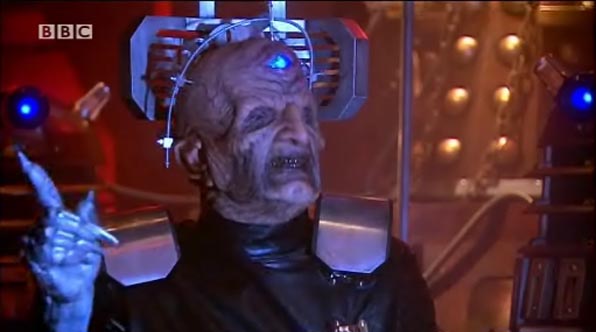
UPDATE - Julian Bleach, here seen as the MC with the magnifying glass, is playing Davros, twisted, crippled creator of the Daleks, in the upcoming season finale of Doctor Who!
Thursday, February 21, 2008
REPO! The Genetic Opera
Here's the trailer for a new rock-opera film that is set for release in April. It looks like a cross between Sweeney Todd and Blade Runner - and if that ain't mondo, I don't know what is!
The movie stars Paul Sorvino, an actor not usually known for his singing, but he got good reviews as the lead in Loesser's The Most Happy Fella at the New York City Opera in 2006. It also features Sarah Brightman (star of The Phantom of the Opera and the ex-Mrs. Lloyd-Webber), Anthony Head (Buffy the Vampire Slayer, Doctor Who, and a very popular Frank N. Furter in the 90s), and 80s rocker Joan Jett (who played Columbia in Rocky Horror on Broadway). It also stars Paris Hilton, but we won't hold that against it.
Thanks to commenter anarchicq for tipping me off!
REPO! THE GENETIC OPERA OFFICIAL WEBSITE
.
.
The movie stars Paul Sorvino, an actor not usually known for his singing, but he got good reviews as the lead in Loesser's The Most Happy Fella at the New York City Opera in 2006. It also features Sarah Brightman (star of The Phantom of the Opera and the ex-Mrs. Lloyd-Webber), Anthony Head (Buffy the Vampire Slayer, Doctor Who, and a very popular Frank N. Furter in the 90s), and 80s rocker Joan Jett (who played Columbia in Rocky Horror on Broadway). It also stars Paris Hilton, but we won't hold that against it.
Thanks to commenter anarchicq for tipping me off!
REPO! THE GENETIC OPERA OFFICIAL WEBSITE
.
.
Wednesday, February 20, 2008
LITTLE SHOP - Weird & Exotic Cuttings
Here's a collection of some of the rarely seen Little Shop stills I have collected, including scenes from the deleted ending and storyboards which have never, to my knowledge, been published before. You might also like to see my collection of movie props and puppet pieces purchased from one of the film's puppeteers. Also, here is a link to the original Little Shop press kit promoting the film. Enjoy!

Concept model of Audrey II built by Lyle Conway. Notice the saliva bubbles on the tongue and vines.
CUT SCENES

This might have earned Little Shop an "R"!

Seymour wrestles with his conscience in the deleted dream sequence from "The Meek Shall Inherit." A couple of brief clips from this scene appear in the bloopers & out-takes montage on the DVD. There are more photos available that I have yet to scan, including images of Seymour turning into a plant! The full song can be heard on the soundtrack album. Let's hope this shows up on DVD sometime! (Topps trading cards scans courtesy of Morgan Leger.)


A dying Audrey sings the "Somewhere That's Green" reprise.

Seymour prepares to sacrifice Audrey. This is apparently a rehearsal shot, as the plant's trap is closed, whereas in the footage seen on the DVD, it is open at this point.

Audrey II says "bye bye" to poor Seymour.


The chorus girls foretell America's doom.

Audrey II stomps down Fifth Avenue. Notice the little Yellow Cab in the lower-right. In the sequence as seen on the DVD, the plant kicks this out of the way and it goes flying! You can just barely see a second Audrey II behind the first one.
The model sequences were filmed at high speed, so when projected normally they'd go more slowly and have a sense of weight and scale. This meant that the plant movements had to be very fast, with some scenes taking mere seconds. This is the opposite of how the full-sized plants were filmed. They were performed slowly, while the camera also filmed at a slower rate which made everything "real time" when projected normally.
 Be sure to click on the above image for a larger size - the level of detail in the model buildings is simply stunning.


Check out the little car being waved around in the plant's tentacle!


The sets created by miniature effects supervisor Richard Conway were truly incredible, with more detail than I've ever seen in a miniatures sequence, including walls that crumbled into individual bricks as the plants crashed through. Here, a plant demolishes a theater showing Jason & the Argonauts, a landmark fantasy film with stop-motion effects by Ray Harryhausen. The effects for this sequence, however, were all computer-controlled movements, not stop-motion.

Brooklyn Bridge - Shot #1 (Between this film, Cloverfield and I Am Legend, Hollywood has not been kind to the Brooklyn Bridge!)

Brooklyn Bridge - Shot #2 (Notice a 2nd plant poking into the frame in the lower left.)

Brooklyn Bridge - Shot #3 (I believe this shot demonstrates the most accurate color balance out of the three Bridge images presented here.)

The final shots of the "Don't Feed the Plants" sequence showed plants clinging to the Statue of Liberty. You can see the tendrils of a second plant sitting on the Statue's shoulder. Below, I added a fiery background in PhotoShop.


The only model footage in the final film is the cityscape behind Steve Martin in the opening bars of "Dentist!"
 Fun fact - Richard Conway filmed a great model sequence featuring another giant, talking, carnivorous plant for a 1976 episode of Doctor Who. The tentacled plant-creature attacks a very detailed model of an English country house in "The Seeds of Doom," before meeting its inevitable fate at the hands of Tom Baker. Of course!
STORYBOARDS
Marvel Comics artist Mike Ploog storyboarded all the Audrey II sequences, allowing the film-makers to get a clear idea of what puppets and what sets would be needed for each angle. These "Mean Green Mother" panels are the only storyboards I've ever seen - I got them on eBay from one of the original puppeteers. That's a story for another time, however. Needless to say, I would love to see these presented on a re-release DVD!
Update, February 2012: A few storyboard panels (for the sequence where Audrey is pulled from the plant's mouth after "Suppertime II") are published in Modern Masters, and I recently found this excellent concept piece titled "You ate the only thing I ever loved!" with a very different plant design. Another different plant, much more "EC Comics" style, is on Ploog's own website.
The storyboards below I still have never seen anywhere!


Concept model of Audrey II built by Lyle Conway. Notice the saliva bubbles on the tongue and vines.
CUT SCENES
This might have earned Little Shop an "R"!
Seymour wrestles with his conscience in the deleted dream sequence from "The Meek Shall Inherit." A couple of brief clips from this scene appear in the bloopers & out-takes montage on the DVD. There are more photos available that I have yet to scan, including images of Seymour turning into a plant! The full song can be heard on the soundtrack album. Let's hope this shows up on DVD sometime! (Topps trading cards scans courtesy of Morgan Leger.)


A dying Audrey sings the "Somewhere That's Green" reprise.
Seymour prepares to sacrifice Audrey. This is apparently a rehearsal shot, as the plant's trap is closed, whereas in the footage seen on the DVD, it is open at this point.
Audrey II says "bye bye" to poor Seymour.

The chorus girls foretell America's doom.
Audrey II stomps down Fifth Avenue. Notice the little Yellow Cab in the lower-right. In the sequence as seen on the DVD, the plant kicks this out of the way and it goes flying! You can just barely see a second Audrey II behind the first one.
The model sequences were filmed at high speed, so when projected normally they'd go more slowly and have a sense of weight and scale. This meant that the plant movements had to be very fast, with some scenes taking mere seconds. This is the opposite of how the full-sized plants were filmed. They were performed slowly, while the camera also filmed at a slower rate which made everything "real time" when projected normally.
 Be sure to click on the above image for a larger size - the level of detail in the model buildings is simply stunning.

Check out the little car being waved around in the plant's tentacle!


The sets created by miniature effects supervisor Richard Conway were truly incredible, with more detail than I've ever seen in a miniatures sequence, including walls that crumbled into individual bricks as the plants crashed through. Here, a plant demolishes a theater showing Jason & the Argonauts, a landmark fantasy film with stop-motion effects by Ray Harryhausen. The effects for this sequence, however, were all computer-controlled movements, not stop-motion.
Brooklyn Bridge - Shot #1 (Between this film, Cloverfield and I Am Legend, Hollywood has not been kind to the Brooklyn Bridge!)
Brooklyn Bridge - Shot #2 (Notice a 2nd plant poking into the frame in the lower left.)
Brooklyn Bridge - Shot #3 (I believe this shot demonstrates the most accurate color balance out of the three Bridge images presented here.)

The final shots of the "Don't Feed the Plants" sequence showed plants clinging to the Statue of Liberty. You can see the tendrils of a second plant sitting on the Statue's shoulder. Below, I added a fiery background in PhotoShop.

The only model footage in the final film is the cityscape behind Steve Martin in the opening bars of "Dentist!"

STORYBOARDS
Marvel Comics artist Mike Ploog storyboarded all the Audrey II sequences, allowing the film-makers to get a clear idea of what puppets and what sets would be needed for each angle. These "Mean Green Mother" panels are the only storyboards I've ever seen - I got them on eBay from one of the original puppeteers. That's a story for another time, however. Needless to say, I would love to see these presented on a re-release DVD!
Update, February 2012: A few storyboard panels (for the sequence where Audrey is pulled from the plant's mouth after "Suppertime II") are published in Modern Masters, and I recently found this excellent concept piece titled "You ate the only thing I ever loved!" with a very different plant design. Another different plant, much more "EC Comics" style, is on Ploog's own website.
The storyboards below I still have never seen anywhere!


Thursday, February 14, 2008
LITTLE SHOP OF HORRORS - Stage to Screen
From unexpected success on film to unexpected smash on stage, it seemed inevitable that Little Shop of Horrors would transition back to the screen. Part two looks at how it happened, plus how and why the ending was changed...
When Hollywood beckoned, the creative team faced a huge challenge in preserving the play’s delicate balance of retro satire, heartfelt romance, and black humor. As it happened, the resulting film was entirely charming, with a script that stuck very faithfully to the stage show (the first 20 minutes are almost a line-by-line transliteration of the original libretto) but condensed scenes and dropped songs where necessary and expanded other ideas which could only be suggested on stage. Most importantly, the cast was perfectly chosen and the director, Frank Oz, proved sympathetic to both the humor and the heart of the show.

Who could resist this little cutie?
Originally, the film was to be shot on the cheap by Martin Scorsese, in authentic Lower East Side locations. This approach was abandoned for a big-budget production shot entirely on stylized skid row sets, with directorial names such as Steven Speilberg and John Landis mentioned. Despite the ballooning budget, however, Howard Ashman wisely kept his screenplay tight and compact, paring down the narrative to the essentials with not a moment wasted. The production team, determined to preserve the play’s unique appeal, even eschewed the time-honored tradition of ousting the play’s lead actress for a big name. Instead, Ellen Greene reprised her endearing stage performance as Audrey. Lovable schlemiel for hire Rick Moranis was cast as Seymour, veteran character actor Vincent Gardenia became Mr. Mushnik, and Steve Martin turned in a brilliant comedic performance as the dastardly - and none to bright - Orin Scrivello, DDS.

Ellen Greene as Little Shop's battered beauty.
The directorial reigns were handed over to Jim Henson’s long-time collaborator Frank Oz, who performed famous Muppet characters such as Miss Piggy, Cookie Monster and Fozzie Bear. More recently, Oz’s portrayals of Yoda (The Empire Strikes Back, 1980) and Augrah (The Dark Crystal, 1982) had set new standards for believable puppet characters. Geffen felt Oz, though a neophyte director, had the comic touch, emotional sensitivity, and puppetry knowledge to make Little Shop work on screen. Oz quickly proved the producer correct. Though helming a lavish multimillion-dollar production, he steadfastly refused to "open up" the play, eschewing both MTV-style flash and conventional staginess. To preserve the play’s emotional intimacy, and to keep the disparate plot elements from devolving into the absurd, he favored a subtle, economical approach that let the material speak for itself. Instead of complicated choreography, he paid close attention to the rhythms of natural movements, and keyed them to the musical beats. To emphasize the characters’ cramped, claustrophobic existences, Oz kept mostly to medium shots and close-ups rather than panoramic cityscapes or intricate camera movements. Robert Paynter’s lush faux-Technicolor cinematography savored the rich colors and weathered textures of Roy Walker’s ingenious sets. By sticking to the essentials, Oz achieved a level of conviction and believability rare for a movie musical, creating a self-contained world where everything, from a spontaneous ballad to an unexpected total eclipse, felt oddly natural.
Crucial to the film’s success was the blues-singing Audrey II. In keeping with Oz’s desire for immediacy and realism, no stop-motion or composite shots were used. Instead, special effects wizard Lyle Conway created a series of incredibly complex hand- and cable-controlled puppets, requiring anywhere from three to fifty operators. The detailed designs and effective puppetry, combined with the jiving, conniving baritone of Levi Stubbs (of the classic soul group The Four Tops), made Audrey II a delightfully unique screen villain instead of just another special effect.

Frank Oz (right) with Lyle Conway and Audrey II.
The biggest challenge of all was to translate the play’s famous proscenium-busting ending to celluloid. Various approaches were considered, including making the entire film a dream, or turning Seymour into a crazed figure shouting, "You’re next!" a la Invasion of the Body Snatchers. In the end, Oz decided to go for broke with a spoof on Godzilla-style monster mayhem that saw Manhattan under attack by giant plants and a foreboding “The End!?!” caption.
However, the faithful translation of the stage show to film was not to be. At the test screening held in Orange County, California, the family-demographic audience was quite positive about the film, laughing in all the right places and even applauding the musical numbers. They especially enjoyed Steve Martin's flamboyant turn as the pompadoured Orin Scrivello, DDS. But the mirth stopped cold once Audrey and Seymour died, and titanic plants took over the world.

Giant plants cackle merrily as New York burns.
According to Oz, no audience response cards were needed to know that the ending wasn’t appreciated. "When Seymour and Audrey died the audience was totally silent. They were waiting for something to happen and when it didn't, they were very angry at us." Oddly enough, the apocalyptic finale was one of the factors in making the stage show such an unexpected success. Oz credits this adverse reaction to the differences between stage and screen verisimilitude. "On the stage you know it's a felt puppet. You know they're going to come back for a curtain call...With film it's very powerful, and you really believe they're dead." The emotional truthfulness Oz had strived to capture worked against him: "If I had turned around and made it very funny and campy, then the problem of their deaths would be like saying 'Hey, it's OK, don't take it seriously.' Then I would have betrayed the people that really cared for the characters."
David Geffen, who backed the off-Broadway show, and whose company also produced the film, had predicted that the downbeat ending would not be accepted, though he boldly allowed filming to proceed. However spectacular, the $5 million sequence was now relegated to the cutting room floor, and another ending was needed – fast. In the new ending, Audrey recovers from the plant attack, and Seymour takes advantage of the flower shop’s demolition to electrocute the plant with an exposed power line. The two lovers then flit off to Audrey's suburban fantasy-land…where an Audrey II seedling lurks, smirking, in the flowerbeds.

"Oh, shit!"
It is a tribute to everyone involved that this new ending does not entirely dissatisfy. Indeed, the characters as impersonated by Rick Moranis and Ellen Greene are so appealing that one wants them to survive, and the "surprise" appearance of another plant (a venerable monster-movie ploy) somewhat alleviates the taste of sugar-coating - not to mention opening up the way for a sequel. Nevertheless, devotees of the stage show stringently objected to the change. "If I hadn't shot the original ending then I might have agreed that I should have," the director exclaims, "But I shot the goddamn thing! I tried it! But the audience is a very dynamic part of a movie. You don't make a movie for yourself, you make it for the audience."
But which audience? That is where Warner Brothers made their crucial mistake - they intended Little Shop to be a family-friendly holiday movie, when in fact, it was a weird cult item (albeit one that cost $30m to make). Forcing it into the feel-good mold warped the film out of shape.
In the following posts, I will argue that the whole conception of who Little Shop of Horrors was for was off. This came from the marketing department, not the artists, and led to the decision to change the ending and fatally damage the story. By providing Little Shop with a Hollywood happy ending, Warner Brothers not only abandoned one of the greatest FX sequences of all time, they turned a funny, charming but essentially serious and moralistic parable into a delightful but spiritually hollow movie. My ultimate hope is that Warner Brothers will do us the favor of releasing a deluxe “director’s cut” DVD and let the movie be seen as it was intended.
Next - how changing the ending changed the proverbial moral of the story.
REFERENCES:
CINEFANTASTIQUE Magazine
Volume 17, Number 1 (January 1987)
Volume 17, Number 5 (September 1987)
CINEFEX Magazine
Number 30 - May 1987
FANGORIA Magazine
Number 60, January 1987
LITTLE SHOP OF HORRORS (Photo Novel)
by Robert and Louise Egan
Perigee Books, 1986
THE LITTLE SHOP OF HORRORS BOOK
by John McCarty and Mark Thomas McGhee
St Martin's Press, 1988
When Hollywood beckoned, the creative team faced a huge challenge in preserving the play’s delicate balance of retro satire, heartfelt romance, and black humor. As it happened, the resulting film was entirely charming, with a script that stuck very faithfully to the stage show (the first 20 minutes are almost a line-by-line transliteration of the original libretto) but condensed scenes and dropped songs where necessary and expanded other ideas which could only be suggested on stage. Most importantly, the cast was perfectly chosen and the director, Frank Oz, proved sympathetic to both the humor and the heart of the show.
Who could resist this little cutie?
Originally, the film was to be shot on the cheap by Martin Scorsese, in authentic Lower East Side locations. This approach was abandoned for a big-budget production shot entirely on stylized skid row sets, with directorial names such as Steven Speilberg and John Landis mentioned. Despite the ballooning budget, however, Howard Ashman wisely kept his screenplay tight and compact, paring down the narrative to the essentials with not a moment wasted. The production team, determined to preserve the play’s unique appeal, even eschewed the time-honored tradition of ousting the play’s lead actress for a big name. Instead, Ellen Greene reprised her endearing stage performance as Audrey. Lovable schlemiel for hire Rick Moranis was cast as Seymour, veteran character actor Vincent Gardenia became Mr. Mushnik, and Steve Martin turned in a brilliant comedic performance as the dastardly - and none to bright - Orin Scrivello, DDS.
Ellen Greene as Little Shop's battered beauty.
The directorial reigns were handed over to Jim Henson’s long-time collaborator Frank Oz, who performed famous Muppet characters such as Miss Piggy, Cookie Monster and Fozzie Bear. More recently, Oz’s portrayals of Yoda (The Empire Strikes Back, 1980) and Augrah (The Dark Crystal, 1982) had set new standards for believable puppet characters. Geffen felt Oz, though a neophyte director, had the comic touch, emotional sensitivity, and puppetry knowledge to make Little Shop work on screen. Oz quickly proved the producer correct. Though helming a lavish multimillion-dollar production, he steadfastly refused to "open up" the play, eschewing both MTV-style flash and conventional staginess. To preserve the play’s emotional intimacy, and to keep the disparate plot elements from devolving into the absurd, he favored a subtle, economical approach that let the material speak for itself. Instead of complicated choreography, he paid close attention to the rhythms of natural movements, and keyed them to the musical beats. To emphasize the characters’ cramped, claustrophobic existences, Oz kept mostly to medium shots and close-ups rather than panoramic cityscapes or intricate camera movements. Robert Paynter’s lush faux-Technicolor cinematography savored the rich colors and weathered textures of Roy Walker’s ingenious sets. By sticking to the essentials, Oz achieved a level of conviction and believability rare for a movie musical, creating a self-contained world where everything, from a spontaneous ballad to an unexpected total eclipse, felt oddly natural.
Crucial to the film’s success was the blues-singing Audrey II. In keeping with Oz’s desire for immediacy and realism, no stop-motion or composite shots were used. Instead, special effects wizard Lyle Conway created a series of incredibly complex hand- and cable-controlled puppets, requiring anywhere from three to fifty operators. The detailed designs and effective puppetry, combined with the jiving, conniving baritone of Levi Stubbs (of the classic soul group The Four Tops), made Audrey II a delightfully unique screen villain instead of just another special effect.
Frank Oz (right) with Lyle Conway and Audrey II.
The biggest challenge of all was to translate the play’s famous proscenium-busting ending to celluloid. Various approaches were considered, including making the entire film a dream, or turning Seymour into a crazed figure shouting, "You’re next!" a la Invasion of the Body Snatchers. In the end, Oz decided to go for broke with a spoof on Godzilla-style monster mayhem that saw Manhattan under attack by giant plants and a foreboding “The End!?!” caption.
However, the faithful translation of the stage show to film was not to be. At the test screening held in Orange County, California, the family-demographic audience was quite positive about the film, laughing in all the right places and even applauding the musical numbers. They especially enjoyed Steve Martin's flamboyant turn as the pompadoured Orin Scrivello, DDS. But the mirth stopped cold once Audrey and Seymour died, and titanic plants took over the world.
Giant plants cackle merrily as New York burns.
According to Oz, no audience response cards were needed to know that the ending wasn’t appreciated. "When Seymour and Audrey died the audience was totally silent. They were waiting for something to happen and when it didn't, they were very angry at us." Oddly enough, the apocalyptic finale was one of the factors in making the stage show such an unexpected success. Oz credits this adverse reaction to the differences between stage and screen verisimilitude. "On the stage you know it's a felt puppet. You know they're going to come back for a curtain call...With film it's very powerful, and you really believe they're dead." The emotional truthfulness Oz had strived to capture worked against him: "If I had turned around and made it very funny and campy, then the problem of their deaths would be like saying 'Hey, it's OK, don't take it seriously.' Then I would have betrayed the people that really cared for the characters."
David Geffen, who backed the off-Broadway show, and whose company also produced the film, had predicted that the downbeat ending would not be accepted, though he boldly allowed filming to proceed. However spectacular, the $5 million sequence was now relegated to the cutting room floor, and another ending was needed – fast. In the new ending, Audrey recovers from the plant attack, and Seymour takes advantage of the flower shop’s demolition to electrocute the plant with an exposed power line. The two lovers then flit off to Audrey's suburban fantasy-land…where an Audrey II seedling lurks, smirking, in the flowerbeds.
"Oh, shit!"
It is a tribute to everyone involved that this new ending does not entirely dissatisfy. Indeed, the characters as impersonated by Rick Moranis and Ellen Greene are so appealing that one wants them to survive, and the "surprise" appearance of another plant (a venerable monster-movie ploy) somewhat alleviates the taste of sugar-coating - not to mention opening up the way for a sequel. Nevertheless, devotees of the stage show stringently objected to the change. "If I hadn't shot the original ending then I might have agreed that I should have," the director exclaims, "But I shot the goddamn thing! I tried it! But the audience is a very dynamic part of a movie. You don't make a movie for yourself, you make it for the audience."
But which audience? That is where Warner Brothers made their crucial mistake - they intended Little Shop to be a family-friendly holiday movie, when in fact, it was a weird cult item (albeit one that cost $30m to make). Forcing it into the feel-good mold warped the film out of shape.
In the following posts, I will argue that the whole conception of who Little Shop of Horrors was for was off. This came from the marketing department, not the artists, and led to the decision to change the ending and fatally damage the story. By providing Little Shop with a Hollywood happy ending, Warner Brothers not only abandoned one of the greatest FX sequences of all time, they turned a funny, charming but essentially serious and moralistic parable into a delightful but spiritually hollow movie. My ultimate hope is that Warner Brothers will do us the favor of releasing a deluxe “director’s cut” DVD and let the movie be seen as it was intended.
Next - how changing the ending changed the proverbial moral of the story.
REFERENCES:
CINEFANTASTIQUE Magazine
Volume 17, Number 1 (January 1987)
Volume 17, Number 5 (September 1987)
CINEFEX Magazine
Number 30 - May 1987
FANGORIA Magazine
Number 60, January 1987
LITTLE SHOP OF HORRORS (Photo Novel)
by Robert and Louise Egan
Perigee Books, 1986
THE LITTLE SHOP OF HORRORS BOOK
by John McCarty and Mark Thomas McGhee
St Martin's Press, 1988
Subscribe to:
Posts (Atom)